Tuesday, August 9, 2011

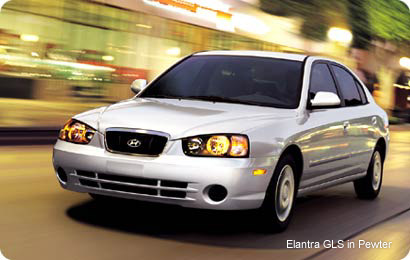
Hyundai Elantra GLS

Hyundai Elantra GLS


The Hyundai Elantra (Korean: 현대 엘란트라), or Hyundai Avante (현대 아반떼) in South Korea, is a compact car from Hyundai of South Korea launched in October 1990 for the 1991 model year, and now in its fifth generation.The Elantra was formerly marketed as the Lantra in Australia and some European markets. In Australia, this was due to the similarly named Mitsubishi Magna Elante model. This gave rise to disagreement from other motor manufacturers, and the name was standardized as "Elantra" worldwide in 2001 (with the exception being Korea and Malaysia still selling under the name "Avante").The Elantra was powered by a Mitsubishi-designed 1.6 L (1596 cc) straight-4 This DOHC 16-valve 1.6 L unit produced 113 hp (84 kW) at 6000 rpm and could push the Elantra to 60 mph (97 km/h) in 9.5 seconds. The quarter-mile (0.4 km) run took 17.1 seconds and produced 80 mph (129 km/h). Top speed was 116 mph (187 km/h). The Elantra got 22 mpg[clarification needed](10.7 L/100 km) in the city cycle. Starting in 1993 there was also a Mitsubishi-designed 1.8 L (1836 cc) straight-4 engine available the 1.8L unit that produced 124 hp (99 kW) at 6000 rpm.The Hyundai Elantra was facelifted in 1992 for the European market, adding Hyundai's current logo to the grille, although North American models retained the previous year's look. In 1993, the vehicle was facelifted again. The third (second in North America) and final facelift of this generation occurred in 1994 for both front and rear fascias.The GLS trim is the standard trim for the Elantra. The top of the line model, the GT trim, came with a stiffer suspension, leather seats, fog lights, alloy wheels, lip spoiler and blue-lit instrument cluster. It was offered as a hatchback since 2001 as a 2002 model year vehicle. The only options for the GT trim were a power moonroof and anti-lock brakes with traction control. The only major option was a Kenwood MP3/CD deck. The GT trim sedan was introduced in 2003 and discontinued in 2005. The GT trim was replaced with the Limited trim for the 2006 model year. The limited trim featured new paint colors, a chrome vertical grille, leather interior with leather steering wheel and leather shifter, and wood trim. The Limited trim did not feature alloy wheels, only steel rims with a 6-spoke cover featured in the GLS model. The GT trim for the five door was produced for the remainder of the 2006 model year.The Elantra is available with 1.6, 1.8 and 2.0 L gasoline engines and a 2.0 L turbodiesel. North American models are only available with the 2.0L gasoline engine. The 1.8 engine is a 1.6 engine modified for the New Zealand market.While compact on the outside, it is listed by the United States Environmental Protection Agency‎ as a mid-size car because of a spacious interior. Although the basic powertrain design has changed little since the second generation, successive improvements have improved fuel economy from an EPA rating of 24 mpg-US (9.8 L/100 km; 29 mpg-imp)/33 mpg-US (7.1 L/100 km; 40 mpg-imp) to 25 mpg-US (9.4 L/100 km; 30 mpg-imp)/33 mpg-US (7.1 L/100 km; 40 mpg-imp) and the current 27 mpg-US (8.7 L/100 km; 32 mpg-imp)/34 mpg-US (6.9 L/100 km; 41 mpg-imp) for manual transmissions, with automatic producing 23 mpg-US (10 L/100 km; 28 mpg-imp)-3 mpg-US (78 L/100 km; 3.6 mpg-imp) fewer. Horsepower also improved from 135 hp (100 kW) to 138 hp (102 kW) and torque from 132 to 136 mainly thanks to the addition of continuously variable valve timing (CVVT) in 2004. Originally, the horsepower rating was misrepresented as 140 hp (104 kW). In 2006 the Elantra was offered with a SULEV emission rated engine in some U.S. states.


2011 Hyundai Elantra GLS Review & Test Drive

Hyundai Elantra GLS Interior
White Hyundai Elantra GLS Hatchback
White Hyundai Elantra GLS Fast Cars
red Hyundai Elantra GLS Front View
Elegant Grey Hyundai Elantra GLS

Saturday, August 6, 2011

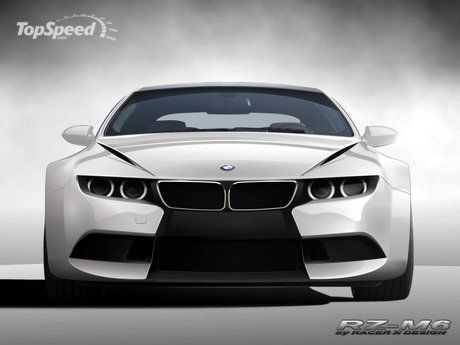
BMW M6


BMW M6 Performance

Red BMW M6 Front View
Elegant BMW M6 With Combinated
Luxury Black BMW M6
Silver BMW M6 Concept
Grey BMW M6 on The Road
Black BMW M6 Hatchback
BMW M6 Interior
Orange BMW M6 Outstanding
White BMW M6 View Detail

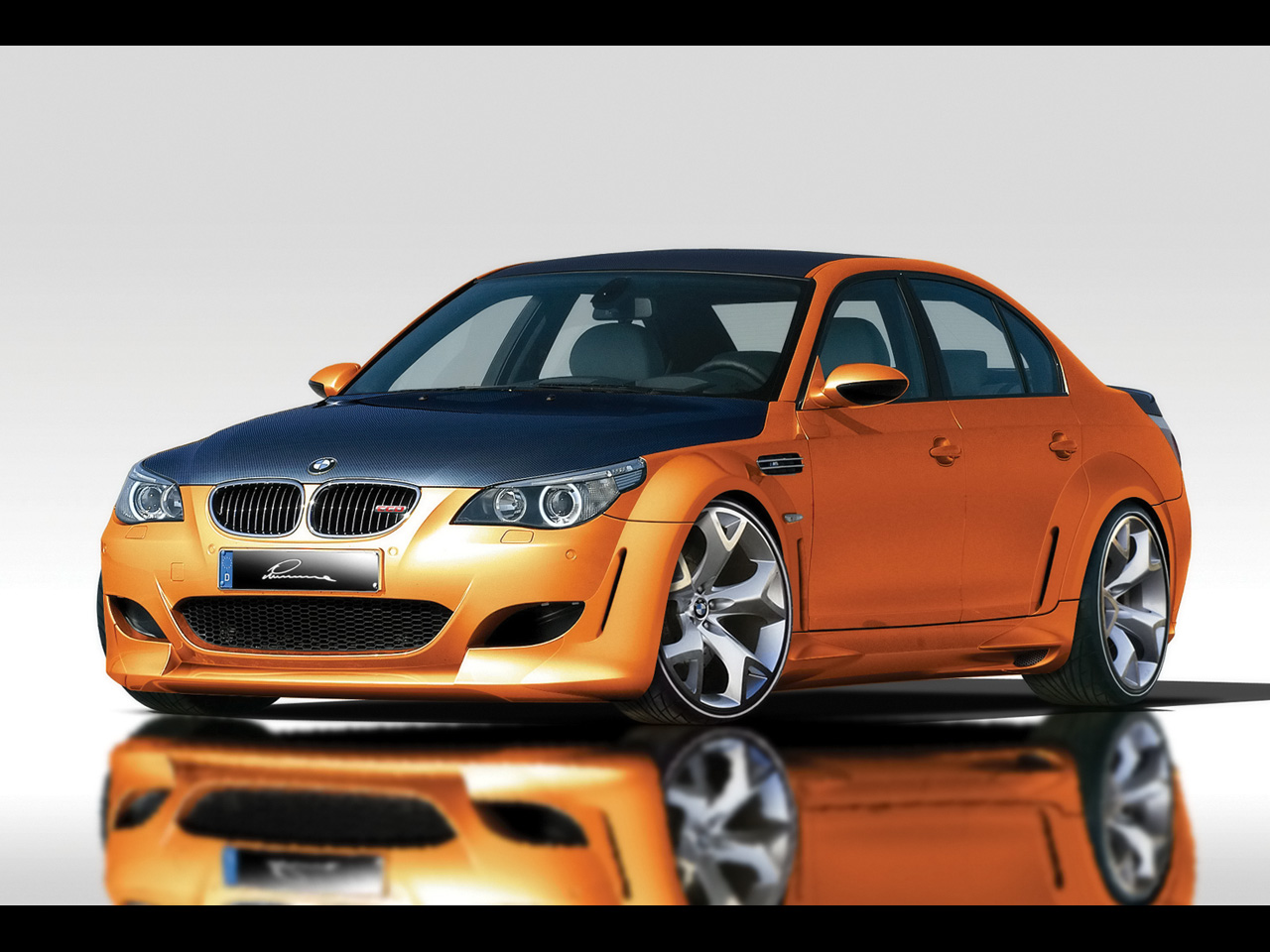
BMW M5

The BMW M5 is a high performance version of the BMW 5-Series executive car built by the Motorsport division of BMW. First introduced at the Amsterdam Motor Show in 1984, the first incarnation of the M5 was hand-built utilizing the 535i chassis and a modified BMW M1 engine, being the fastest production sedan in the world at the time of its introduction. Subsequent iterations of the M5 have been built from each generation of the 5-Series platform, including the E34, E60/E61, and most recently, F10, with the first orders to be delivered in late 2011.Due to the longevity of its nameplate and undisputed position at the top of BMW's midsize lineup, the M5 remains one of the best known sport sedans, despite competition from Mercedes-AMG and Audi quattro GmbH.The M5 was preceded in 1980 by the M535i, the third road-going automobile to emerge from the BMW Motorsport workshop. While the BMW 3.0 CSL and M1 had been limited-production, purpose-built sports cars, the M535i was a reworked 5-series sedan fitted with the BMW M30B35 engine.

BMW M5 Commercial

Elegant BMW M5 With Combinated Color
Black BMW M5 Tattoo
Silver BMW M5 View Detail
Black BMW M5 Fast Cars
Silver BMW M5 Concept
Luxury Blue BMW M5 Looks so Sporty

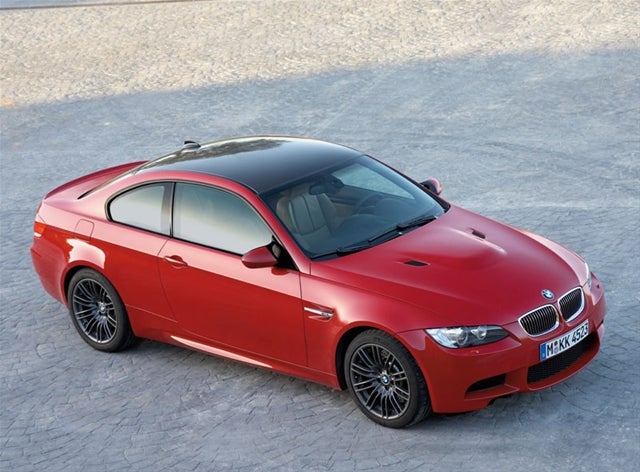
BMW M3

The BMW M3 is a high-performance version of the BMW 3 Series, developed by BMW's in-house motorsport division, BMW M. M3 models have been derived from the E30, E36, E46 and E90/E92/E93 3-series, and sold with coupé, sedan and convertible body styles. Upgrades over the "standard" 3-Series automobiles include more powerful and responsive (yet at times smaller) engines, improved handling/suspension/braking systems, aerodynamic body enhancements, and interior/exterior accents with the tri-color "M" (Motorsport) emblem.


BMW M3 vs Mercedes C63 AMG vs Audi RS4 in Spain - Top Gear - BBC

White BMW M3 Looks so Sporty
Black BMW M3 Sedan
White BMW M3 Hatchback
Red BMW M3 Performance
Silver BMW M3 Fast Cars
Silver BMW M3 Concept

Tuesday, August 2, 2011

Koenigsegg CCXR

The Koenigsegg CCXR is a mid-engined roadster from Swedish car manufacturer Koenigsegg. The CCXR is powered by a modified twin-supercharged V8 engine from its predecessor the CCX, converted to use E85 or E100 ethanol fuel as well as standard 98 octane petrol.Besides the use of ethanol fuel, the only changes to the engine are modified fuel injectors, upgraded fuel lines and piston rings and a higher boost setting on the superchargers. The increased power of the CCXR, compared to the CCX, is a result of the cooling properties of ethanol in the engine's combustion chambers allowing for a higher pressure in the cylinder and the biofuel having a higher octane rating of 113 RON compared to 95 RON for gasoline in North America and 100 RON for gasoline in Europe.
Koenigsegg says that it will go 271 mph (436 km/h), making it theoretically the fastest production car in the world.[citation needed] The designer of the CCXR, and founder of Koenigsegg, Christian von Koenigsegg is quoted as saying, "Our engineers couldn't quite believe the figures when we tested the car".In March 2009 the CCXR was chosen by Forbes as one of the ten most beautiful cars in history.
The CCXR Edition can accelerate from 0–100 km/h (62 mph) in 2.9 seconds and from 0–200 km/h (120 mph) in 8.9 seconds.[citation needed] The CCXR can accelerate from 0–200 km/h (120 mph), then decelerate from 200 (120mph)–0km/h, in 13.7 seconds. According to Koenigsegg, the estimated top speed of the CCXR is 400+ km/h (250+ mph), although this has not been officially verified. The braking distance of the CCXR is 32 m (when decelerating from 100 km/h (62 mph)).
The Koenigsegg CCXR engine is a 4.7 litre 288 cu in (4,719 cc) V8, with dual overhead camshafts and 4 valves per cylinder. The engine block is made of Aluminium alloy that has undergone a T7 heat treatment, a form of accelerated precipitation strengthening. The engine has a compression ratio of 8.8:1, is boosted by two Rotrex centrifugal superchargers that provide 1.6 bar of boost, having a patented response charge system for optimal engine response, and is injected by a sequential multipoint fuel injection system. The engine is lubricated with a dry sump system with a separate oil pump, the pistons are cooled by oil sprayed onto them and the oil itself has an external cooler.The engine produces 1,064 bhp (793 kW; 1,079 PS) at 7200 rpm and 782 lb·ft (1,060 N·m) of torque at 6100 rpm on E100 ethanol fuel. The CCX engine burns 18 L/100 km (16 mpg-imp; 13 mpg-US) on highway travel and 22 L/100 km (13 mpg-imp; 11 mpg-US) on combined travel on E85 ethanol fuel.
The CCXR is a two-door, two-seater with a removable hardtop that can be stored under the front hood lid allowing it to be changed at any location. The body, made of pre-impregnated carbon fiber and Kevlar with lightweight sandwich reinforcements, is 169 in (4,300 mm) long, 78.6 in (2,000 mm) wide and 44.1 in (1,120 mm) tall with a ground clearance of 3.94 in (100 mm).
The CCXR has a frontal area of 1.867 m2 (2,894 sq in) and a drag coefficient of 0.33. The drag area (frontal area times drag coefficient) is 0.61611 m2 (954.97 sq in). It also has a flat underside with venturi tunnels at the rear and an optional rear spoiler to improve aerodynamics. At 250 km/h (160 mph) there is 100kg of downforce.
The CCXR has a specially developed transversal six speed manual gearbox with an optional paddle-shift with a dual plate clutch of diameter 240 mm.The power is fed to the rear wheels through a torque sensitive, limited slip differential. The gear ratios of the CCXR can be seen in the table below.
The Koenigsegg CCXR Edition is a limited edition of the Koenigsegg CCXR manufactured in 2008. The Koenigsegg CCXR Edition is only available by special order in a very limited run of 6 production models.It has a clear, fully visible unpainted carbon fiber body. The forged, machined and polished aluminium Edition wheels are extremely light and incorporate optimum brake cooling. The bright, polished surface of the wheels was chosen to maximize the contrast against the black clear carbon body. The CCXR Edition has a high performance specially developed rear wing, a larger front splitter plus side front strakes.

Koenigsegg CCXR in tunnel

gumpert apollo

Gumpert Apollo

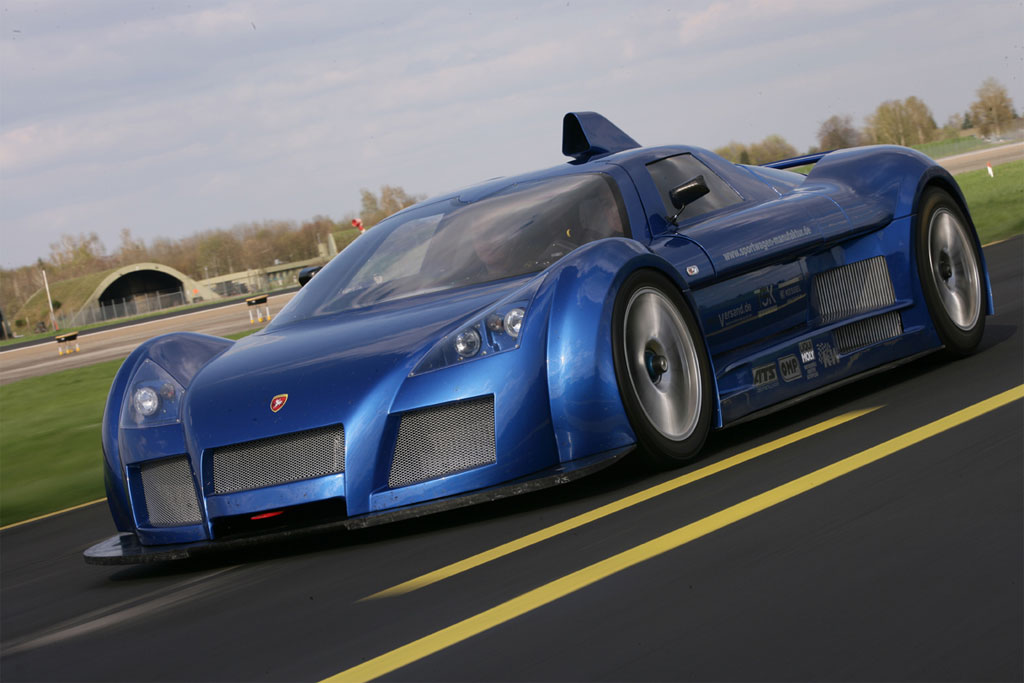
The Gumpert Apollo is a sports car produced by German automaker Gumpert Sportwagenmanufaktur GmbH in Altenburg.In 2000 Roland Gumpert proposed a new generation sports car. One of the first concerns of this car was that it would be a street-legal car, ready for the race track. Gumpert returned to Germany at the end of 2001, after more than three years in China. There he was the head of sales and marketing, responsible for the development of the dealer network of the Audi-VW joint enterprise. Just after he returned to Germany, Roland Mayer asked him if he would assist him in building a prototype sports car. Audi approved Gumpert's involvement in this project, on the condition that, if they did eventually develop a new sports car, it would not be a prototype, but a series product.The company, located in Altenburg, Germany, was founded in 2004 under the name GMG Sportwagenmanufaktur Altenburg GmbH. The technical guidelines were defined and the first designs of the car were drawn by Marco Vanetta. Upon Vanetta's completion of this process, the first 1:4 scale model of Gumpert's car was produced in 2001.Gumpert continued with the development of the Apollo, along with the Technical University of Munich and the Ingolstadt University of Applied Sciences. They have assisted with the constructional work, computer simulations, and wind tunnel tests. This research and development helped forming the blueprint for the first 1:1 scale model. Finally, two prototype Apollos were constructed. Production of the Apollo started in October 2005.


Fifth Gear - Gumpert Apollo

The Apollo is a 1,100 kg (2,400 lb) to 1,200 kg (2,600 lb) (depending on options), street-legal race car. It is a mid-engined, rear wheel drive two-seater constructed on a tubular chromoly frame, with fiberglass or optional carbon fiber body panels. Gumpert claim the design of the Apollo is optimized so that the car could drive upside-down in a tunnel if driven at sufficiently high speeds (over 190 mph), but this has not been tested.
The Apollo uses a 4163 cc bi-turbo intercooled version of the Audi V8 engine. The 90° V8 has a closed-deck light metal crankcase with dry sump lubrication. The light metal cylinder heads have five valves per cylinder, four overhead camshafts, VarioCam Direct variable valve timing on the intakes, and hydraulic valve clearance compensation. The double-flow exhaust system has four oxygen sensors to monitor the gas mixture, and a 3-way catalytic converter. Modern controls include an on-board diagnostic system, eight-coil electronic ignition, sequential multipoint fuel injection, and an electronic (drive by wire) accelerator system.
There are 3 engine types available:
Base version - approximately 650 PS (478 kW; 641 bhp)
Sport version - approximately 700 PS (515 kW; 690 bhp)
Race version - approximately 800 PS (588 kW; 789 bhp)
During April 2005 the Apollo made its racing debut in the Divinol Cup. This Apollo was driven by Belgian race driver Ruben Maes; he finished third on the Hockenheimring race track. Three years later Gumpert announced that they would enter a hybrid version of the Apollo in the 2008 24 Hours Nürburgring, driven by 2004 winner Dirk Müller and ex-Formula One racer Heinz-Harald Frentzen. Three months passed between the first discussions and the finished hybrid Apollo. The Apollo was driven in the 24 Hours Nürburgring in May 2008. The hybrid Apollo can deliver up to 519 PS (382 kW; 512 hp), powered with a 3.3 litre V8 twin-turbo engine coupled with a 100 kW (136 PS; 134 hp) electric motor. The car has the ability to recharge the battery under braking.
On July 27, 2008 an Apollo Sport was featured on the UK show Top Gear. Richard Hammond and The Stig drove the Apollo Sport.With a lap time of 1:17.1, the Apollo Sport was for a while the fastest on the 'Power Lap Board', but has been beaten by the Bugatti Veyron Super Sport, the Lamborghini Aventador, the McLaren MP4-12C and Ariel Atom V8 since then.

Ascari A10

Ascari A10

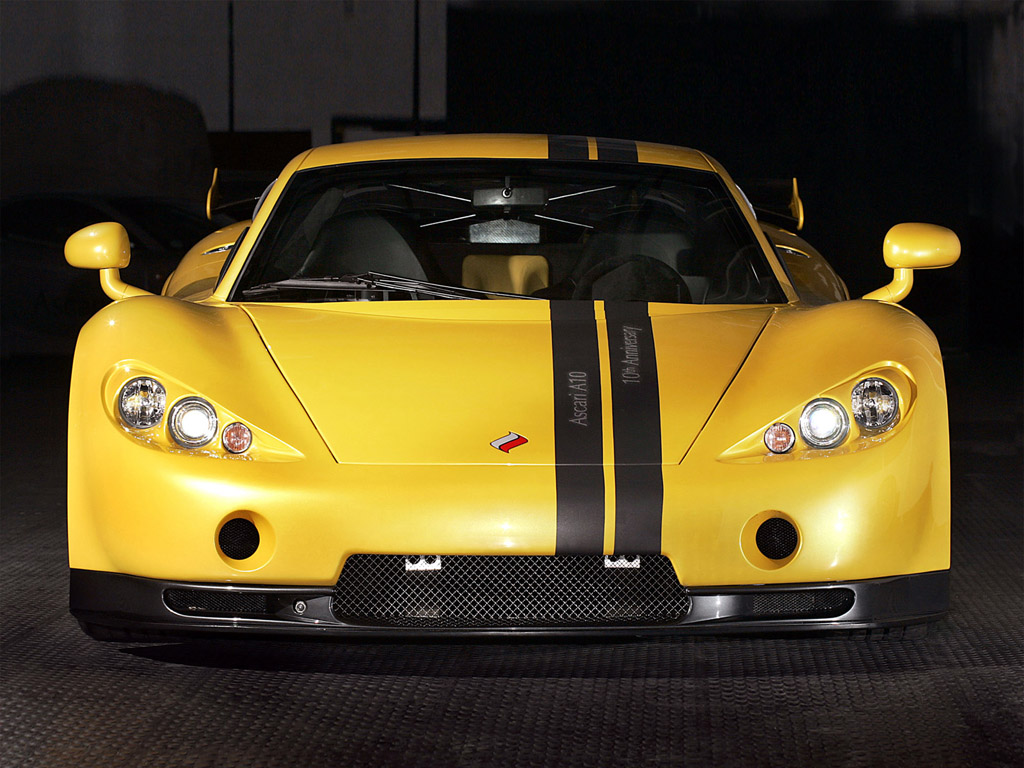
The Ascari A10 is an automobile produced by the British company Ascari Cars that was conceived by Dutch millionaire Klaas Zwart. It is a road-going evolution of the KZ1-R GT race car currently contesting the Spanish GT Championship, with both cars penned by ex-Formula One designer Paul Brown. It is the third road car produced by the company, after the Ecosse and the KZ1, with the name A10 intended to commemorate the 10th anniversary of the company.The A10 features a modified 5.0 L BMW V8 engine producing 625 bhp (466 kW), delivered via a six speed sequential manual gearbox, with a regular manual transmission available as an option. The A10 shares the same basic carbon fibre chassis as the KZ1, with all-new bodywork and racing-derived suspension. Despite the addition of an FIA-spec roll cage and the fire-suppression system, the removal of soundproofing and such luxuries as air conditioning and a stereo system contributes to the A10's relatively light weight of 1,280 kg (2,822 lb).The company plans to hand-assemble 50 A10s at its Banbury, England assembly plant, at a price of approximately £350,000 (US$650,000) each.

TOP GEAR-- Ascari A10 *HQ*

Yellow Ascari A10 Angine
Yellow Ascari A10 Hatchback
Ascari A10 Interior
Ascari A10 Concept
Ascari A10 Fast Cars
Related Posts Plugin for WordPress, Blogger...